Independent equipment research
Commercial Carpet Cleaners: Compare Machines, Extractors & Accessories
Choose a commercial carpet cleaner by the work it must finish: carpeted area, soil, access, drying deadline and service support. Compare real machines, verified Amazon products and the operating details that determine whether an extractor fits your route.
18.1K head-term demandReal ASINs and imagesNo invented hands-on testing
EXTRACTclean · recover · dry
Quick answer
What makes a carpet cleaner commercial?
A commercial carpet cleaner is designed around repeat use, recoverable tanks, serviceable wear parts and a duty cycle that suits business or facility routes. The useful choice is not automatically the heaviest machine. A hotel corridor, apartment turnover crew and auto detailer need different tank sizes, tools, hose reach and drying strategies.
Shop by job
Commercial carpet-cleaning equipment
Equipment category
Commercial Carpet Extractors
Portable extraction machines for repeat facility routes and professional cleaning work.
Compare options →Equipment category
Upright Carpet Cleaners
Self-contained machines for open carpeted rooms and routine deep cleaning.
Compare options →Equipment category
Portable Spot Cleaners
Compact extractors for spills, stairs, upholstery and vehicle interiors.
Compare options →Equipment category
Heated Carpet Extractors
Machines that add heat for soil-heavy commercial and restoration workflows.
Compare options →Equipment category
Carpet Cleaners for Pet Messes
Machines and formulas selected for urine, tracked soil and recurring odor treatment.
Compare options →Equipment category
Upholstery Cleaning Machines
Compact extraction systems and hand tools for fabric furniture and interiors.
Compare options →Equipment category
Auto Detailing Extractors
Portable extractors, clear hand tools and hoses for seats and carpeted interiors.
Compare options →Equipment category
Carpet Cleaning Solutions
Machine-compatible shampoos, rinses and low-residue concentrates.
Compare options →The five-variable shortlist
Compare a commercial carpet cleaner without chasing one impressive number
DecisionWhat to recordWhy it changes the machine
RouteCleanable square feet, rooms, stairs and refill distanceDetermines capacity and practical production.
SoilDry grit, tracked soil, oil, beverages, organic contaminationChanges pretreatment, agitation and rinse needs.
AccessDoors, elevators, vehicle space, outlets and drainageLimits dimensions, filled weight and power demand.
RecoveryVacuum design, seals, tool contact and dry-pass techniqueControls moisture left in the carpet.
SupportParts diagrams, hoses, seals, brushes and local serviceDetermines whether downtime is manageable.
Verified catalog
Commercial cleaners and supplies to research
As an Amazon Associate, we may earn from qualifying purchases.

Upright extractor
Bissell BigGreen Commercial BG10
Two-motor commercial extractor designed around repeat full-room cleaning.
Read product researchCheck on Amazon ↗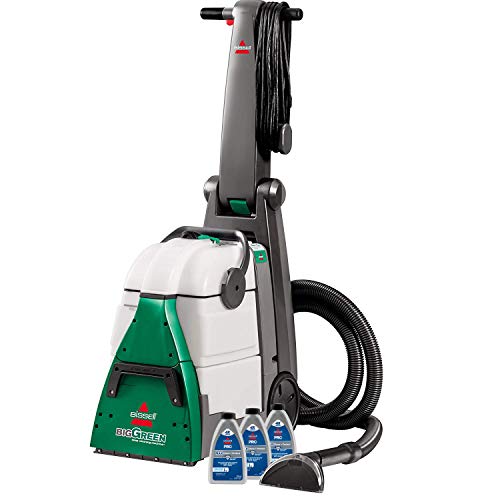
Upright extractor
BISSELL Big Green Professional
Large upright platform with a powered brush for broad carpeted areas.
Read product researchCheck on Amazon ↗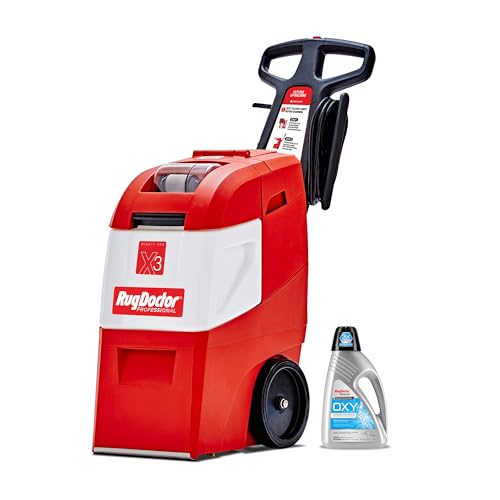
Commercial upright
Rug Doctor Mighty Pro X3 with Oxy Pack
Commercial-style upright bundled with an oxy cleaning formula.
Read product researchCheck on Amazon ↗
Portable extractor
Kärcher Puzzi 8/1 C
Compact professional extractor with onboard accessory storage and a 3.9-gallon tank.
Read product researchCheck on Amazon ↗
Pet-focused upright
BISSELL Big Green Pet Pro
Full-size upright aimed at pet soil and repeat deep-cleaning routes.
Read product researchCheck on Amazon ↗
Upright cleaner
Hoover PowerScrub Deluxe
Upright carpet cleaner supplied with pet and upholstery tools.
Read product researchCheck on Amazon ↗
Portable spot cleaner
BISSELL Little Green Mini 4075
Small-footprint spot cleaner for quick spills and limited storage.
Read product researchCheck on Amazon ↗
Portable pet cleaner
BISSELL Little Green Max Pet 3860
Portable extraction package built around pet-related spot work.
Read product researchCheck on Amazon ↗Planning before purchasing
Estimate route time, dilution and drying needs
Use transparent inputs rather than brochure assumptions. Save the result as a checklist for product comparison.
Topical authority library
Answers for selection, operation and troubleshooting
Selection & specifications
How to Choose a Commercial Carpet Cleaner
Match tank size, recovery performance, cleaning width, heat and serviceability to the actual route instead of buying from motor wattage alone.
Selection & specifications
Commercial Carpet Cleaner Machine Buying Guide
Start with carpeted area, soil load, available drying time and who will transport the machine; those constraints determine the useful machine class.
Selection & specifications
What Size Carpet Extractor Do I Need?
Size the extractor from the area cleaned per shift, refill distance, doorway clearance and vehicle or elevator limits.
Selection & specifications
Carpet Extractor PSI Explained
PSI describes solution pressure, but useful cleaning depends on matched flow, agitation, chemistry and recovery—not the largest pressure number.
Selection & specifications
CFM vs Water Lift in Carpet Extractors
Airflow moves recovered moisture while water lift reflects resistance capability; neither number alone predicts drying performance.
Selection & specifications
Heated vs Non-Heated Carpet Extractor
Heat can improve oily-soil cleaning, but it adds cost, power demand and material restrictions that do not suit every facility.
Selection & specifications
Single vs Dual Vacuum Motor Carpet Extractors
A dual-motor design can support stronger recovery, while weight, circuit demand and maintenance may favor a simpler single-motor machine.
Selection & specifications
Carpet Extractor Tank Size Guide
Larger tanks reduce refill stops but increase filled weight and may create transport, dumping and storage problems.
Selection & specifications
Commercial vs Residential Carpet Cleaner
Commercial machines usually emphasize duty cycle, tanks and repairability; residential machines often prioritize storage, price and occasional use.
Commercial carpet cleaner questions
Is a carpet extractor the same as a carpet cleaner?
Carpet cleaner is the broad term. An extractor is a machine that applies cleaning solution and recovers the loosened soil and moisture through a vacuum path.
Is higher PSI always better?
No. Pressure must match the carpet, chemistry, tool and recovery system. Excess pressure can drive moisture deeper without improving removal.
Should carpet be vacuumed first?
Usually yes. Dry vacuuming removes abrasive grit, hair and loose soil before water and detergent are introduced.
What controls drying time?
The moisture left after extraction, fiber and backing, indoor humidity, temperature, ventilation, airflow and the number of deliberate dry passes.
Can one solution work in every machine?
No. Follow the machine instructions and the chemical label. Foam level, dilution, fiber compatibility and warranty requirements differ.